

Key Takeaways
- Assisted living can work well for someone in the early stages of dementia who needs daily help.
- Memory care adds secure spaces, specially trained team members, and a steady daily rhythm.
- Missed meals, falls, or getting lost can be signs your loved one needs more support.
- A short-term respite stay lets your loved one meet the team and settle in at their own pace.
- A community with both levels of care lets your loved one change apartments without leaving familiar faces behind.
When Assisted Living Works for Someone with Dementia
Dad is asking for the second time if he has taken morning pills, and earlier, he left the coffee pot on after breakfast. At The Gardens of Three Rivers, we understand that you want him to feel safe and supported. At the same time, you also want him to keep his favorite sweater, his morning walk, and his say in how the day goes. That balance is delicate, but your loved one deserves that kind of care and attention.
Someone with early-stage dementia can live well in assisted living. This works best when they need daily help rather than round-the-clock safety support. As needs change, the Gardens of Three Rivers offers memory care, which features more structure and secure spaces.
What Assisted Living Offers Someone with Dementia
Daily Help That Fits Your Routines
Assisted living gives your loved one a hand with tasks that start to slip. Meanwhile, they can keep doing what they enjoy on their own. Daily help tends to include these services.
- Medication management and gentle reminders
- Help with bathing and dressing
- Mealtime reminders and shared dining
- Housekeeping that keeps the apartment fresh and tidy
This kind of support is often a good fit in the early stages of dementia. Each resident has a personalized care plan shaped around their preferences. Your loved one might prefer an early breakfast on some days and a cup of tea before bed on others. With the right care plan in place, both of those options can be respected.
Social Time and Comfortable Spaces
Your loved one can join friends for meals, try a fitness class, or browse the library on a quiet afternoon. Different on-site spaces provide them with plenty of choices.
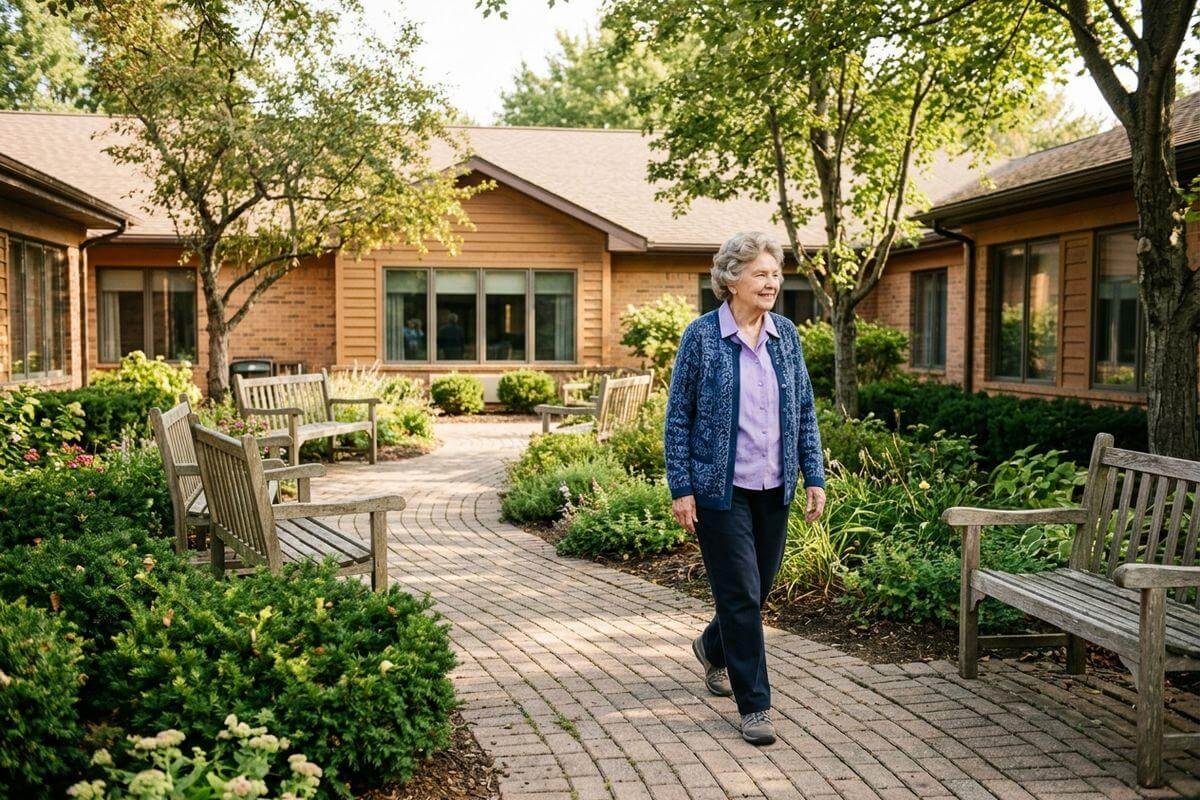
- A courtyard for sunshine and fresh air
- A chapel for quiet reflection
- A theater for movie afternoons
- A salon and barbershop for a fresh cut
When comparing senior apartments, you might want to look for a private space. Having a room solely occupied by your loved one means they can fill it with family photos and a favorite quilt.
Key Differences Between Assisted Living and Memory Care
Safety and Secure Spaces
In terms of safety, assisted living provides emergency alerts and daily check-ins. It’s a lifestyle that suits someone who still finds their way around with ease.
Memory care provides added security beyond standard assisted living safety measures. It offers secure entries and calm, simple layouts that make finding the way to meals and activities easier. Outdoor spaces are often present as well. These areas are enclosed so residents can enjoy fresh air safely.
Team Skills and Daily Structure
Memory care teams have undergone dementia training and respond with patience when a resident feels unsettled. Residents also get more hands-on help at meals and while getting dressed. Days in this lifestyle follow a more steady rhythm with music, art, and familiar routines.
Cost Factors to Think About
Memory care usually costs more than assisted living since it provides a higher level of support. Apartment size, services, and amenities also shape pricing. You can ask the team about what the fees include and payment options during a tour.
Signs Your Loved One May Need More Support
Changes in Daily Life to Watch For
Watch for these small shifts. These changes usually form a larger pattern over time.
- Missed medicines
- Skipped meals or a fridge that stays full
- A stove left on after cooking
- More frequent falls
Sometimes, family caregivers may find themselves needing more help and more rest. That’s a sign worth taking seriously too.
How to Plan a Gentle Move for Your Loved One
Talk Openly and Make a List Together
Include your loved one in decisions. Start by asking what matters most to them. Maybe it’s a sunny window or a weekly church service. This is important information that you can go through with the care team.
Also, ask your loved one which daily tasks feel harder now. Notes from recent doctor visits can also help you and the team choose the right level of care.
Try a Short-Term Respite Stay First
Respite care gives seniors a chance to experience senior living without the pressure of long-term commitment. During the stay, your loved one can meet the team, join meals, and explore the community at their own pace.
It’s also a great option for family caregivers who need some time to take care of other personal tasks in life. Respite care can provide your loved one with the daily support they need as you’re temporarily away.
Choose a Community with Both Levels of Care
When a community offers both assisted living and memory care, it gives your loved one the convenience of an easy move.
They won’t have to change communities. And that means familiar faces and surroundings stay the same. That can make the shift feel gentler.
Find Dementia Care in Three Rivers, Michigan
The Gardens of Three Rivers offers assisted living, secure memory care, and short-term respite stays in private studio apartments. Spouses and adult children receive clear, regular updates about their loved one’s care. That way, you can stay informed and involved all the time.
We strive to provide your loved one with the care that they deserve. Schedule a tour of our senior living community in Three Rivers, MI, today. You can see the courtyard, meet our team, and discover how different support levels could serve your loved one.